

Working with epoxy resin is not particularly difficult, but that doesn't mean that even if you have experience you won't make a mistake. In this article, we will introduce you to the 10 most common mistakes when working with epoxy resin.
It is important to know that it is easier to correct mistakes while the epoxy is still wet. When the epoxy hardens, much more effort is required to fix the problems. The good news is that applying a second layer usually corrects even the worst mistakes in most cases.
You can watch the entire video on our YouTube channel:
1. Choosing the wrong product for your project

Before you start working with epoxy resin, first you need to make sure you have stocked up on the right resin foryour project. If you are not sure which resin you need, check out ourarticle, where we describe the different types of resin and their purposes.
Epoxy resins differ by application. You cannot pour art resin on a kitchen table, for example. Because of the pouring itself. The viscosity of art resin is different and does not allow mixing colors but blending them smoothly, of course, when the correct technique is followed.
2. Incorrect mixing, measuring, and stirring of the two components resin + hardener

Most types of epoxy resin are sold in two-part kits and must be mixed before use. The mixing ratio is very important and must be strictly followed. On the bottles, you will find information whether it is mixed by weight or by volume.
If you make a mistake in the mixing ratio, you will find that your epoxy resin will harden too quickly or too slowly or, in the worst case, will not harden at all.
Volume
Prepare measuring containers – buckets, measuring cups, or others. Measure precisely to ensure your resin hardens.
Weight
All ourresinsare measured by weight. Tare the containers you will weigh in and be sure to calculate the weight correctly.Do NOT try to add less or more, because your resin will be wasted.
3. Ignoring the temperature at which you work

When working with epoxy resin, temperature is of primary importance. Almost all epoxy resins have a temperature range that determines how they harden properly. If you work outside these temperature ranges, your epoxy may fail by hardening too early, too late, or not hardening at all, wasting your time.
*We often receive questions related to room temperature from our customers. It turns out that basements or garages are colder and the resin dries more slowly.
4. Mixing different brands and types of epoxy resins

This is unacceptable. Never do this. Epoxy is a type of chemical. You cannot mix resin from different brands or from the same brand but different types. The reasons for this are both the mixing ratio and the epoxy resin formula.
We advise you to choose resin and hardener only from one brand and fromthe same type.
5. Incorrectly made and leveled formwork
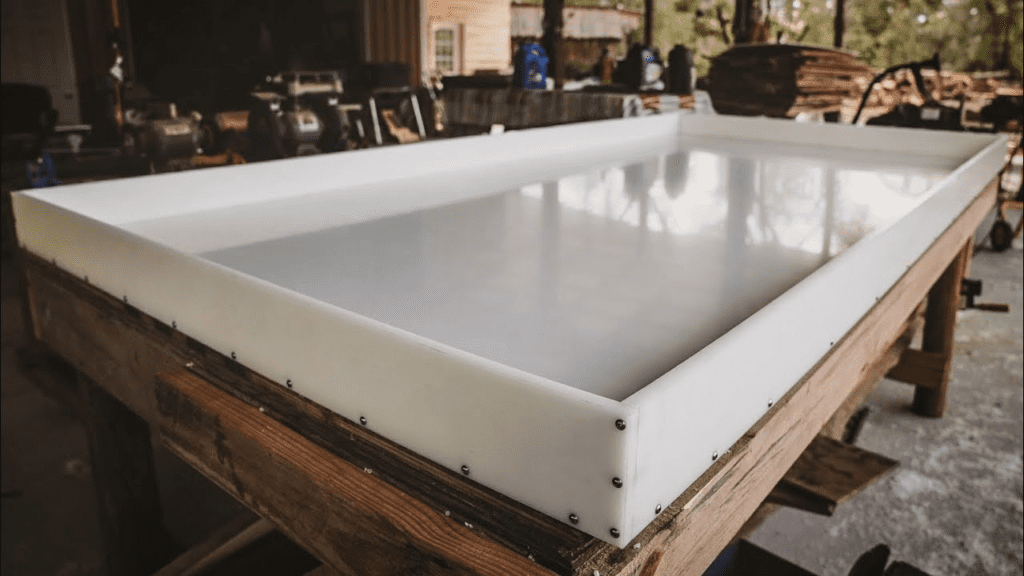
It is good to spend more time making your formwork or mold. Always level the work table at the beginning so that the epoxy does not flow to one side and then you have to sand endlessly or pour more resin to even out the gap.
To make a table of the type"River table"For example, a lot of resin is needed, so the formwork is very important. Seal it well because resin is like water and will find a way to leak out.
Don't rushThis endeavor requires patience and technological time for some things. The silicone you use to seal the formwork must be completely dry. If the silicone is NOT dry, the resin reacts with the silicone and may start smoking and heating up.
6. DO NOT seal wooden or porous materials

Another important point when working with natural materials like wood is to first coat it with resin or epoxy primer so that the resin does not soak in and create many bubbles. The wood itself is dry.
7. Floating of light elements when embedding them in epoxy resin

To avoidthe floating of elementsfrom our mold or cast, it is good to glue them. You can use epoxy resin or fast-drying glue, but make sure whichever you use is dry before pouring the resin.
Think carefully. You can make one layer first by pouring it at the bottom. Wait for it to dry and then coat the place where you want to place your detail. For example, an orange slice, dandelion, or clover.
Pour on top and blow on it, wait for it to dry. Finally, pour it to the top, positioned exactly where you want it!
8. Using dirty tools

Make sure the tools you use are clean and dry. You don't want discoloration or debris that will ruin your final result when making a transparent item.
When leaving your creation to dry, first make sure there is no insect that can get sealed and waste your time. In the photo above, you will see the consequences of this mistake in reality.
9. DO NOT clean your tools with water
What do we mean? Do not clean with water,only with acetone.If even a small amount of water gets into your mixture, it becomes unusable. Be careful even when leaving the mixture in a water bath. You don't want sticky spots on the surface.
10. Improper storage of your epoxy resin

Make sure your bottles are not in direct sunlight. It is good for them to be tightly closed. It is NOT correct to leave your resin on a shelf and expect it to be usable after 2 years.
Epoxy resin after openinghas a shelf life of 6 monthsand after purchase –1 year.