0

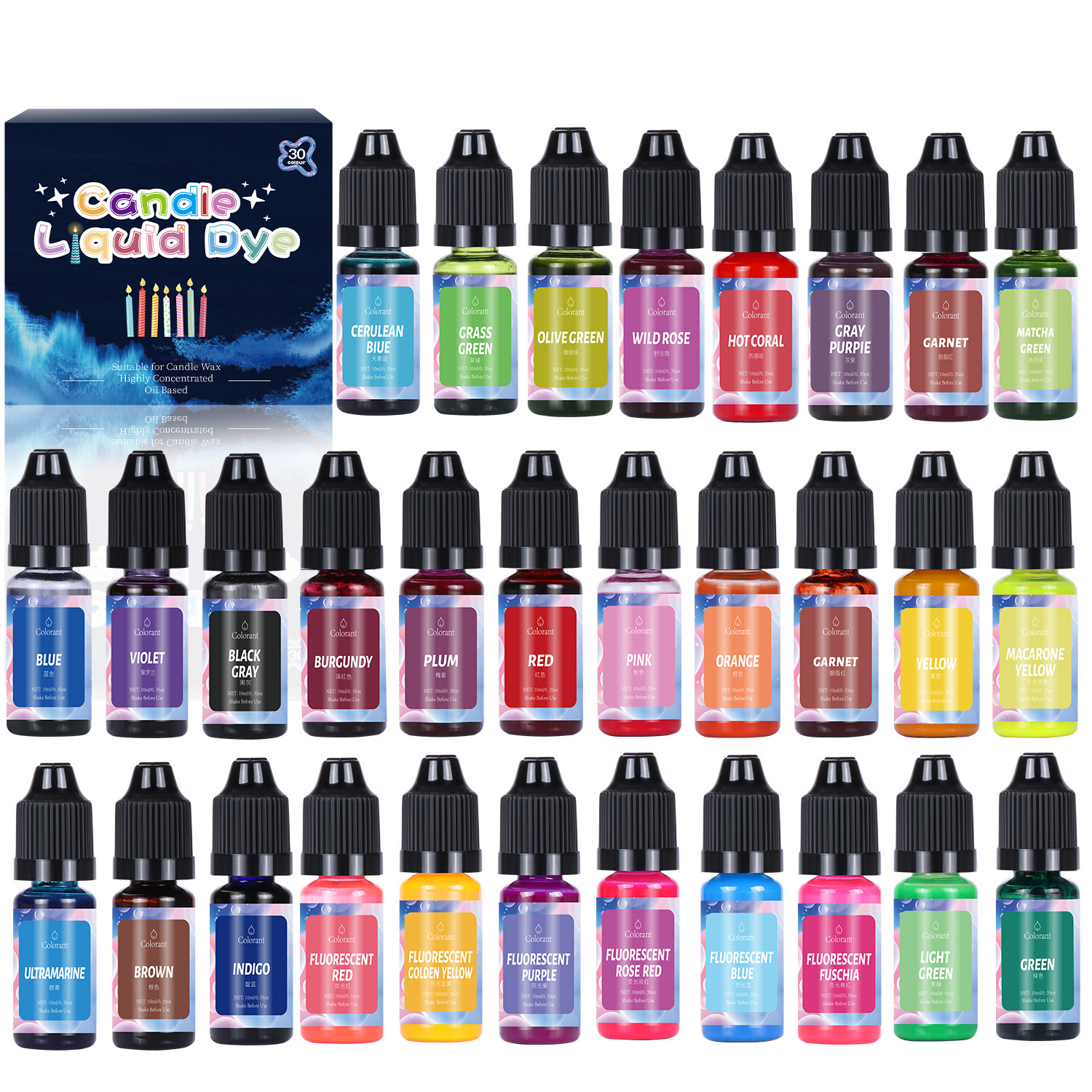
🎨 Set of 30 liquid dyes for wax, candles, soaps – 10 ml

21.93 

In stock

🎨 Set of 30 colors – Liquid dyes for candles and soaps

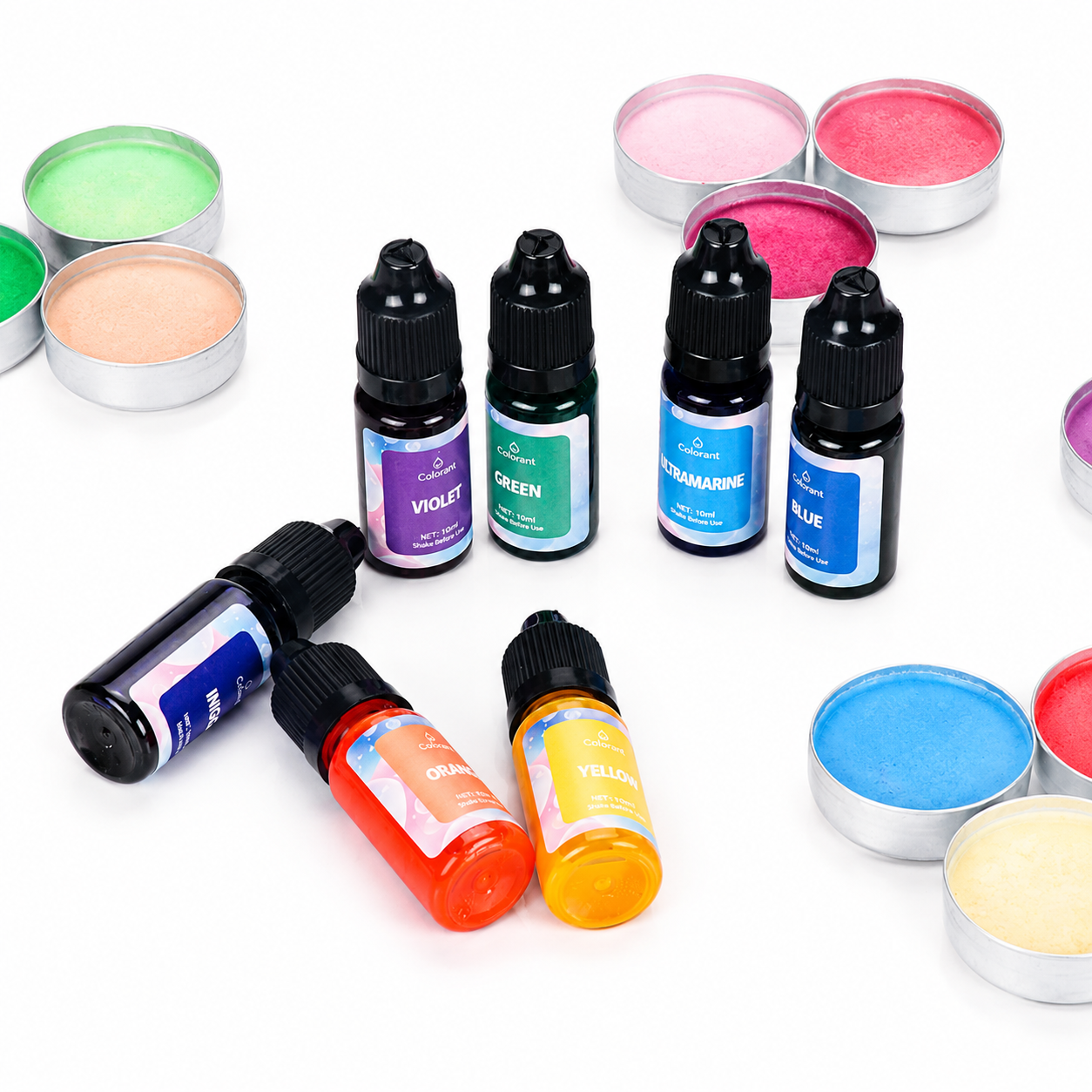
Set of 30 highly concentrated liquid dyes, specially created for coloring paraffin, soy, palm, beeswax, gel wax and soap bases. Each color is oil-based, which ensures even distribution and a rich shade with just a few drops.

🧴 Packaging: 10 ml per bottle
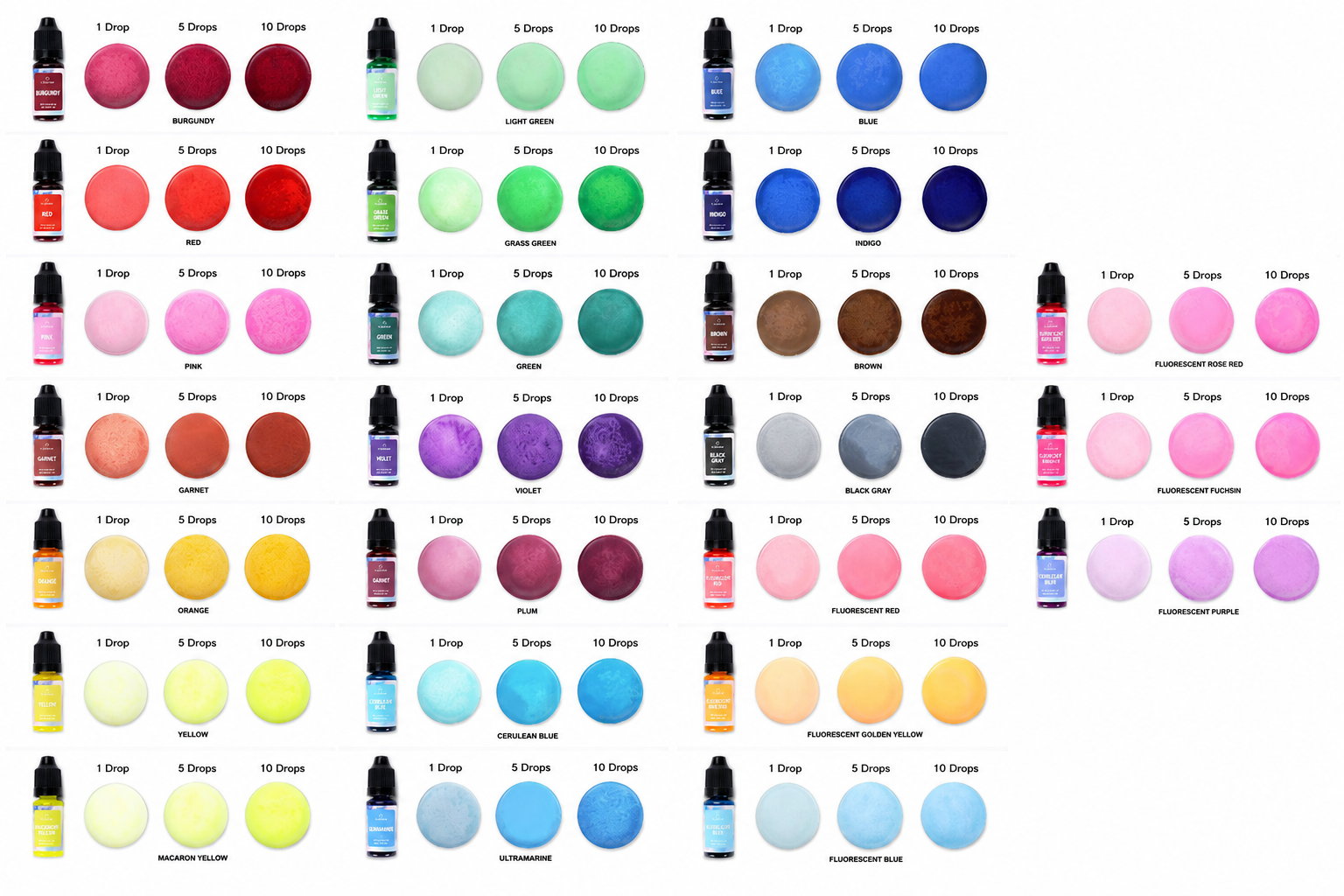
🌈 Color palette: Includes classic, pastel, neon, and deep colors – perfect for all candle styles: minimalist, scented, sculptural, shaped, bubble candles, 3D candles, and more.


✨ Advantages:

  • πŸ”Έ High concentration
  • πŸ”Έ Does not alter the scent of the candles

  • πŸ”Έ Suitable for all types of wax and bases

  • πŸ”Έ UResistant colors

  • πŸ”Έ Free of toxic ingredients

  • πŸ”Έ Ideal for both beginners and professional candle makers


🎨 Usage:

  • Shake well before use

  • Add a small amount (for example 1–2 ΠΊΠ°ΠΏΠΊΠΈ) to the melted wax

  • Stir carefully and test the color

  • If necessary, add more for a more intense effect

πŸ’‘ A preliminary test is recommended with a small amount of wax/base, as the saturation may vary depending on the type of wax/base, temperature, and chosen color.


πŸ“Œ Tip: For pastel candles – use a smaller amount. For saturated shades – add extra when stirring.


🎁 The set is suitable for:
βœ” Making decorative and scented candles
βœ” Layered effects and gradient coloring
βœ” Bubble & shaped candles
βœ” Gift sets and creative projects
βœ” DIY creations at home or in the studio


🌟 The perfect choice for anyone who loves handmade candle/soap making and wants a professional result with minimal effort!
Others about us

Customer reviews

Don’t just trust us, see what our customers say online!

Frequently Asked Questions

Find answers to the most frequently asked questions we receive from our customers!

Contact us

How much color should be added to epoxy resin to tint it?

Answer

The amount of color (pigments, liquid colorants, or glitters) depends on how saturated you want the color to be.

We recommend starting with a smaller amount, mixing well, and adding more if you want the color to be more saturated.

Why is my resin cloudy and not crystal clear?

Answer

The resin you received is cloudy and not crystal clear as described. In cold weather, it is normal for epoxy resin to become cloudy and lose its crystal-clear transparency. This process is called resin crystallization.

To stop the crystallization process, immerse the bottle or tube you received in a bucket or similar container, then pour hot water.

Wait about 10 minutes until it returns to its crystalline appearance.

How should epoxy resin be stored?

Answer
  • Store in a room with room temperature to avoid crystallization.
  • Do not store in direct sunlight.
  • Do not store resin and hardener mixed together.
  • Store in the original bottles/tubes.

What is the consumption rate of epoxy resin?

Answer

The consumption rate is: 1 kg of epoxy resin covers 1 sq.m. at 1 mm thickness.

What safety measures should we follow when working with epoxy resin?

Answer
  • Keep the resin away from children
  • Store in a cool and well-ventilated place
  • The container must be tightly closed
  • Keep away from sources of ignition
  • Do not inhale resin fumes
  • Avoid contact with eyes and skin
  • Wear a protective face mask and clothing
  • If you feel unwell, seek medical help
  • Use only in a well-ventilated environment

It is no secret that epoxy resin has a chemical origin containing toxins. However, after the product is fully cured, it is not toxic. If resin gets on the skin, wash it thoroughly under running water with soap.

What happens if the resin drying time has passed, but it is still sticky and not completely dry?

Answer

It is possible that the mixing ratios of resin and hardener were not followed. In such a case, the product should be discarded.

The room temperature can also affect the drying time. We recommend the temperature to be around 20 degrees.

Is it possible to color epoxy resin?

Answer

Yes, epoxy resin can be colored. Coloring is done using powdered pigments, liquid colorants, and glitters.

On our website, you can find the necessary pigments, colorants, and glitters for this purpose.

Can we add live flowers and others into the resin?

Answer

It is not recommended because the organism is full of oxygen and bubbles will form; also, darkening or yellowing may occur due to the organism’s decay. It is better if decorations are herbarium (dried flowers, dried insects).
Other decorations can also be added – glitter, pigment, glass elements, and many more.

On what surfaces can I use epoxy resin?

Answer

Epoxy resin is a versatile material that can be used on glass, ceramics, wood, metal, polymer clay, and any other surfaces.

Epoxy resin can be used to create various coatings, including a high-gloss finish, which is ideal for countertops, floors, and jewelry.

What is the technology of working with epoxy resin?

Answer

Preliminary preparation is very important for a good final result. The work area must be clean, the product characteristics must be known, safety conditions and instructions must be followed before starting work. Usually, poor results are related to improper mixing of the two components (resin and hardener).

It is important to follow the ratios of the two components (resin and hardener) specified by the manufacturer.

Also, the resin must be used immediately after mixing because the resin curing process is irreversible after adding the hardener.

What can we use epoxy resin for?

Answer

Epoxy resin is very popular for coating floors, wood, souvenirs, furniture, and more. It is also suitable for making jewelry and art panels. Our resin is crystal clear but can be colored. Only pigments specially developed for this purpose are used.

What is epoxy resin?

Answer

Epoxy resin is an oligomer of the epoxy group, which under the influence of a hardener can form cross-linked polymers.

Epoxy resins have wide applications: metal coatings, wood coatings, use in electronic/electrical components, high-voltage electrical insulators, production of paintbrushes and adhesives, decorations, jewelry.