
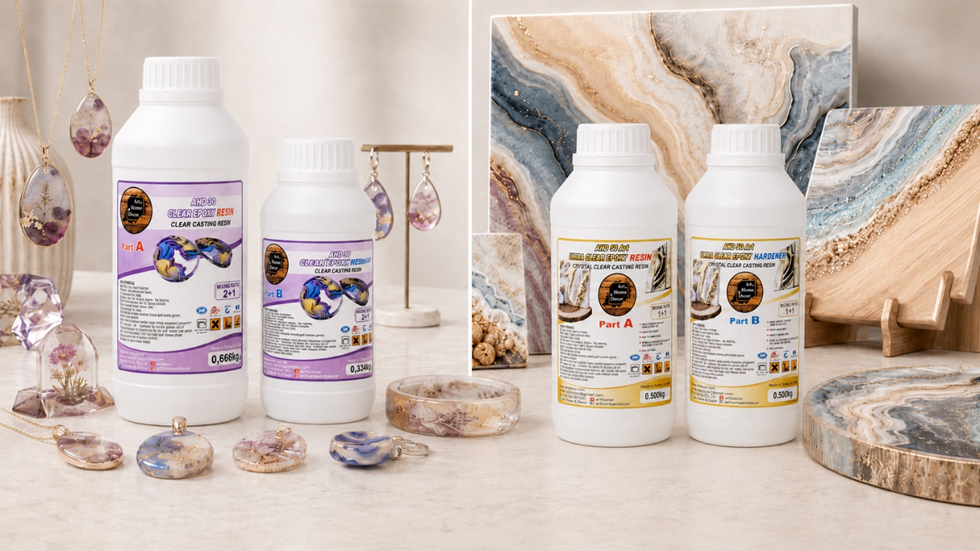
AHD30 and AHD50 are transparent epoxy resins from the AHD Clear Epoxy series, but they are designed for a completely different type of work. AHD30 is for silicone molds, jewelry, and small castings up to 1 cm thick, with a mixing ratio of 2:1 by weight. AHD50 is thicker, with high viscosity, and is created for thin pours from 2 to 5 mm on surfaces: paintings, art panels, and marine effects, with a ratio of 1:1. Both resins are available in Art, Home & Decor with delivery throughout Bulgaria. The right choice depends on the thickness of the pour and the type of project, and below you will find a complete comparison.
Let's take a closer look at each of them.
What projects is AHD30 suitable for?
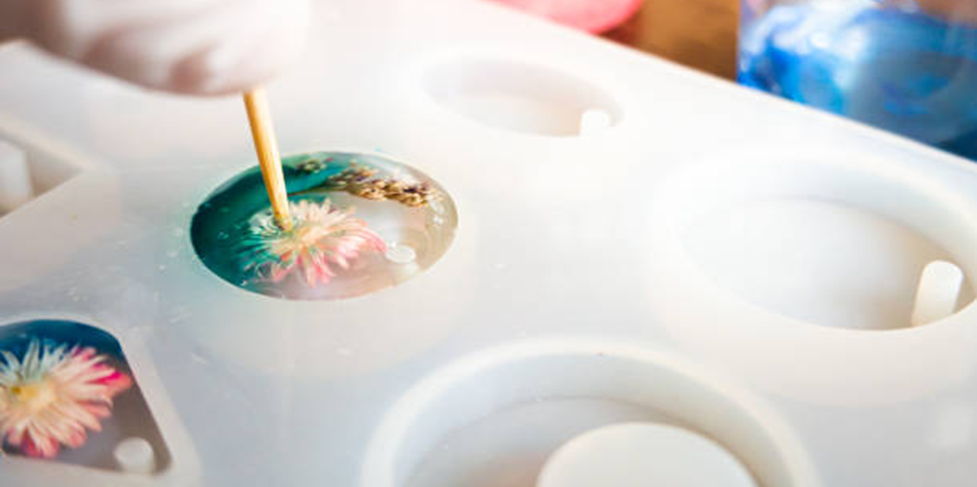
AHD30 Clear Epoxy is designed for working in silicone molds and for making decorative items with shape and volume. It can be poured in a single layer up to 1 cm thick, which makes it convenient when the project requires a little more depth.
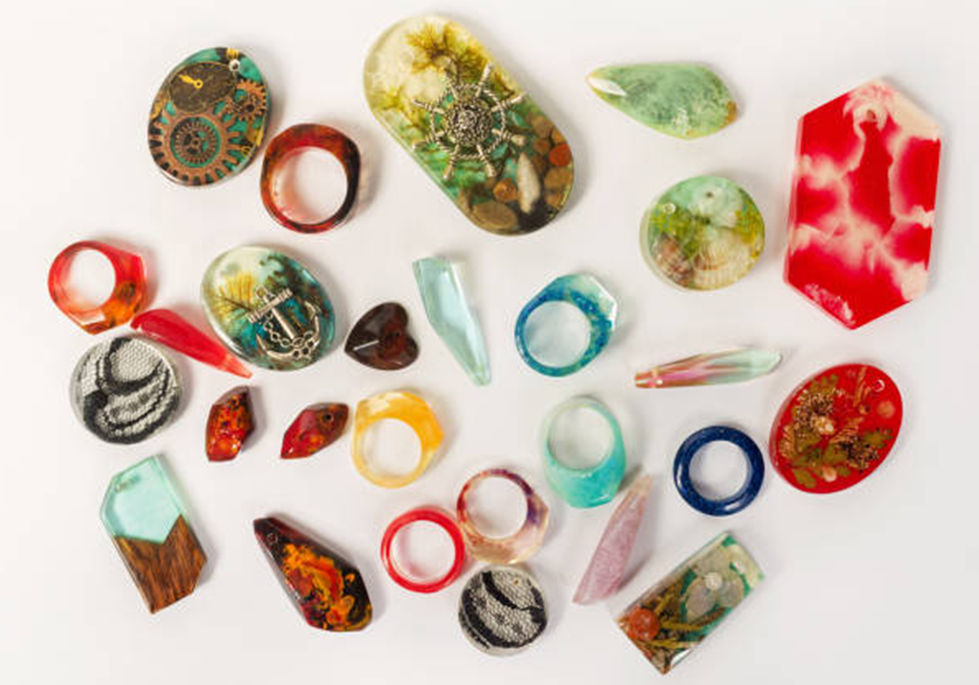
Typical projects with AHD30:
- epoxy resin jewelry (pendants, rings, earrings)
- keychains
- small figurines and souvenirs
- coasters
- decorative elements with embedded dried flowers, glitter, or pigments
- transparent castings in a silicone mold
- thin glossy coating
The mixing ratio is 2:1, two parts resin to one part hardener by weight. The working time is about 60 minutes. This is enough to mix, color, add decorations, and pour into the mold without rushing.
AHD30 is the right choice when the final product has a specific shape and volume and is removed from the mold.
What projects is AHD50 suitable for?
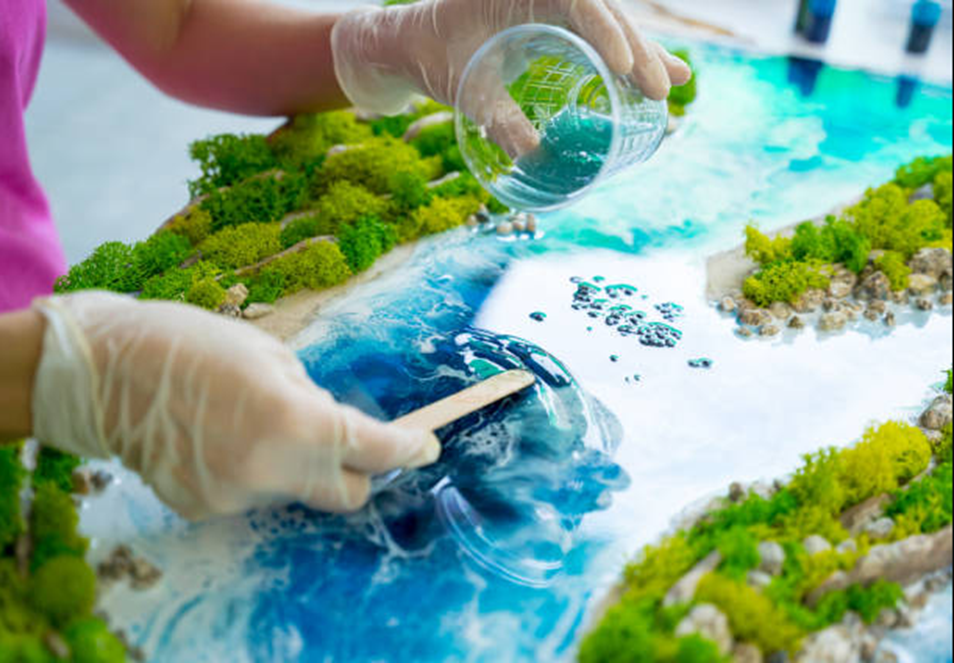
AHD50 Clear Epoxy It is created for art applications on surfaces. Unlike AHD30, it is not intended for molds. Its thicker consistency and high viscosity are designed for a thin decorative layer from 2 to 5 mm.
Typical projects with AHD50:
- epoxy resin paintings
- art panels and abstract compositions
- sea effects and waves
- thin coating on wood, MDF, or canvas
- photo casting
- decorative trays and panels
The mixing ratio is 1:1, one part resin to one part hardener. The working time is shorter, about 30 to 40 minutes, so prepare all colors and materials before mixing the components.
AHD50 is the right choice when working on a flat surface and you want controlled color distribution.
Why is AHD50 more suitable for paintings and marine effects?
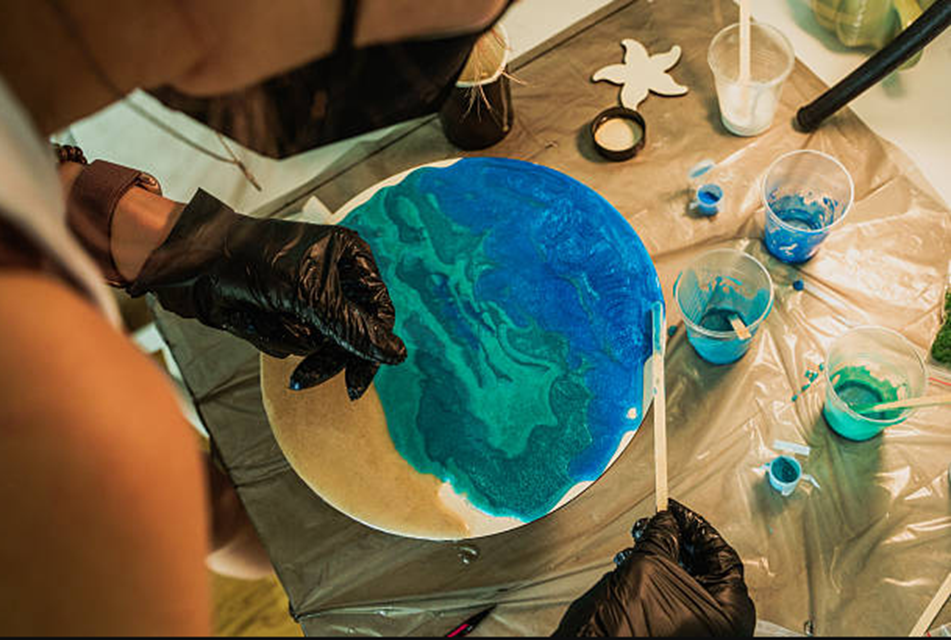
The high viscosity of AHD50 allows for more controlled movement of colors, and this is the key reason it is preferred for artistic techniques.
In paintings and art panels, several colors are usually used simultaneously: white, blue, turquoise, gold, pearl. If the resin is too thin, the colors quickly blend and the lines between them are lost. The final result looks blurred.
AHD50 holds the colors better in the place where they are applied. The resin is still a liquid material and the colors move, but the movement is slower and more predictable. This way, the waves look clearer, the lines are cleaner, and the individual colors are distinctly separated.
It is this density that distinguishes it from standard casting resins. If you have seen impressive marine paintings with realistic waves on social media, most of them are made with a similar type of thick resin.
How do AHD30 and AHD50 compare?
The table below summarizes the main differences between the two resins:
| Characteristic | AHD30 | AHD50 |
|---|---|---|
| Main application | Molds, jewelry, small castings | Paintings, panels, marine effects |
| Coating thickness | Up to 1 cm | From 2 to 5 mm |
| Consistency | More fluid, suitable for molds | Thicker, with high viscosity |
| Mixing ratio | 2:1 by weight | 1:1 |
| Working time | About 60 minutes | About 30 to 40 minutes |
| Suitable for deep casts | Yes, up to 1 cm per layer | No |
| Suitable for paintings | Can, but it is not the primary choice | Yes |
| Suitable for marine effects | Can, but AHD50 is better | Yes |
Both resins are transparent and can be colored with pigments, pastes, and powders. The difference is not in quality, but in purpose.
Which resin should I choose for my project?
The choice depends on two simple factors: whether you are working in a mold or on a surface and what thickness of the pour you need.
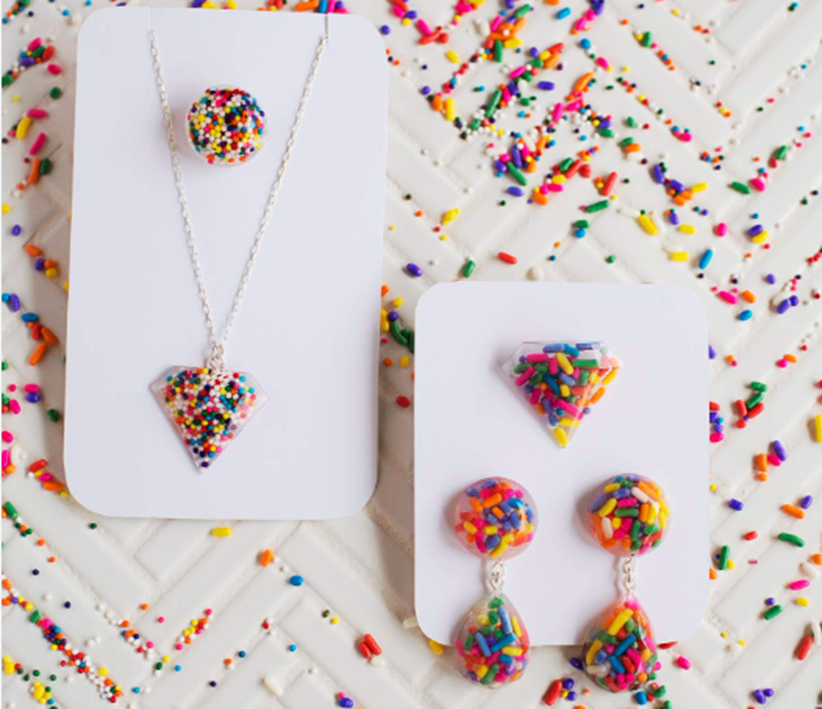
Choose AHD30 if you will be working in a silicone mold and making a volume and shape item: jewelry, keychains, figurines, coasters, souvenirs. For these projects, you need a layer thickness of up to 1 cm and more working time, which AHD30 provides.
Choose AHD50 if you will be working on a flat surface and making a painting, art panel, seascape, or decorative coating. For these projects, you want a thin layer from 2 to 5 mm and a denser consistency that holds the colors in place.
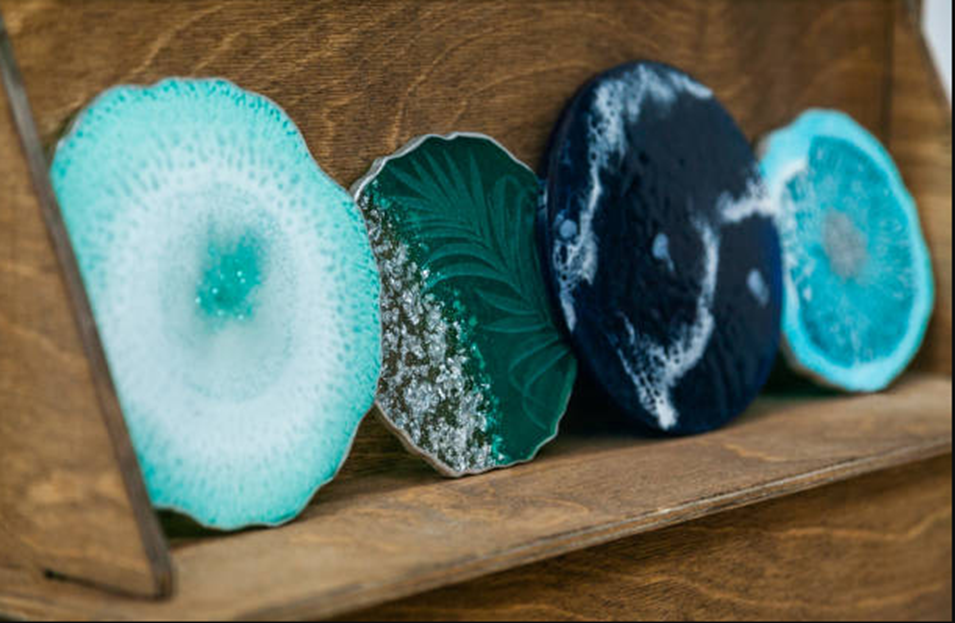
If you are still hesitating, think about the final product. If it is something with a shape that is taken out of a mold, AHD30 is the right choice. If it is something flat and colorful that stays on the surface, this is a job for AHD50.
What mistakes do beginners make when choosing resin?
The most common mistake is to choose resin just because it is transparent. Not all transparent epoxy resins are the same; each has a specific thickness range and type of application.
If you use AHD50 for a thick mold casting, the result is likely not to be good. It is designed for thin layers and may overheat or not cure evenly if too thick.
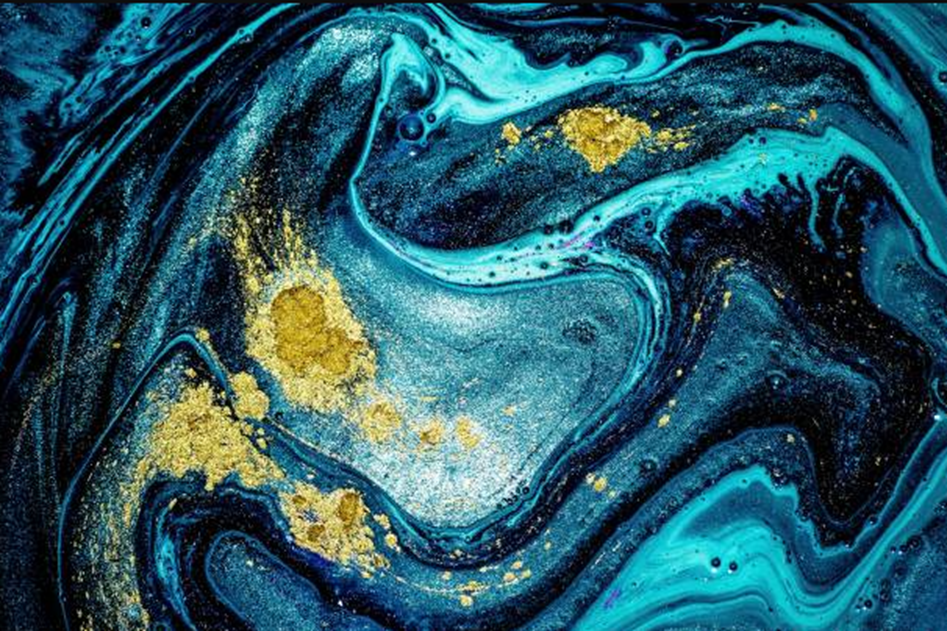
If you use AHD30 for a multi-color painting, the effect may not be as clear and controlled. The more liquid consistency will allow the colors to blend faster than you would like.
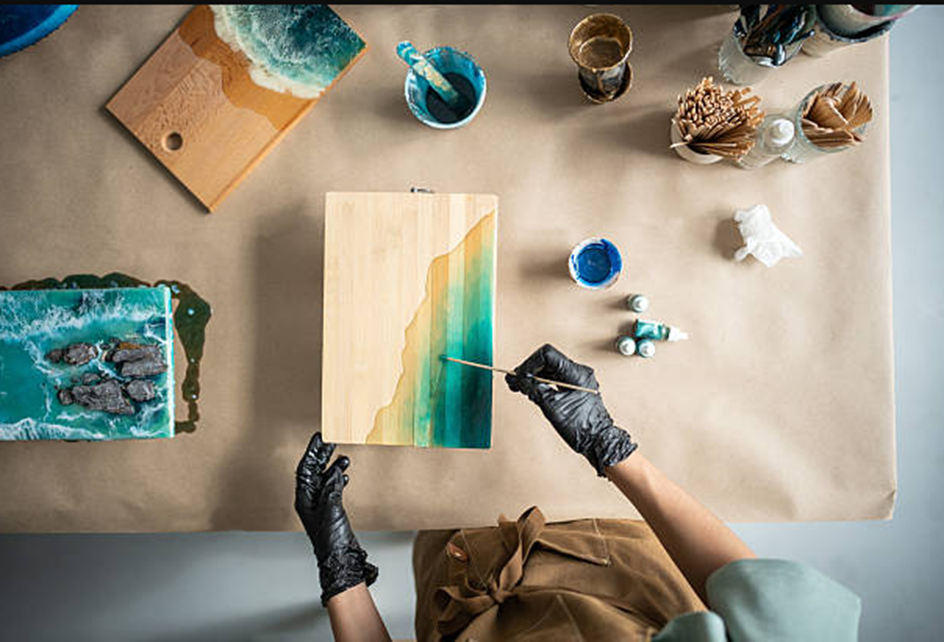
Before ordering, check four things: maximum casting thickness, whether the project is in a mold or on a surface, the mixing ratio, and how much working time you need. These four characteristics almost always determine which resin is right.
Delivery throughout Bulgaria
Art Home & Decor delivers AHD30, AHD50, and the full range epoxy resins to any address in Bulgaria. If you are not sure which resin is suitable for your project, contact us, and we will help you choose.
Frequently Asked Questions
What is the difference between AHD30 and AHD50?
AHD30 is for molds, jewelry, and small castings up to 1 cm thick, with a 2:1 ratio. AHD50 is a thicker resin for thin pours from 2 to 5 mm on surfaces, such as paintings and ocean effects, with a 1:1 ratio. The main difference is in the casting thickness and type of application.
Can I use AHD30 for paintings?
Technically yes, but AHD30 is not the optimal choice for paintings. Its more fluid consistency makes color control more difficult in artistic techniques. For paintings, panels, and ocean effects AHD50 it gives significantly better results.
Can I use AHD50 for molds?
It is not recommended. AHD50 is designed for thin pours from 2 to 5 mm and is not intended for deeper castings. For silicone molds use AHD30.
What is the maximum pour thickness for AHD30?
AHD30 can be poured in a single layer up to 1 cm thick. If the project requires greater thickness, work in several layers, allowing each layer to harden before the next.
What is the working time of AHD50?
The working time of AHD50 is about 30 to 40 minutes from the moment of mixing. Prepare all colors, pigments, and tools in advance to fully utilize the working window.
Which resin is better for ocean effects?
AHD50 is the better choice for marine effects. Its high viscosity allows for clearer wave shaping and more distinct separation between colors, which is key for realistic seascapes.
Can AHD30 and AHD50 be colored with pigments?
Yes, both resins can be colored with epoxy pigments, color pastes, pearl powders, glitter, and other decorations. At ArtHDecor you will find a full range of colorants for epoxy resin.
Order the right resin from ArtHDecor
Check out AHD30 and AHD50 in our catalog. If you are not sure which resin is for your project, write to us or call the listed phone numbers. We will help you with the choice.